Ways of the Mongols
Eternal blue sky
Above the steppes of Mongolia stretches a sky that seems to have no end. The Mongols call it Tengri, the eternal blue sky – Mönkh Khökh Tengri. It is father, order and fate all at once. Beneath it lies Etügen, Mother Earth, with her mountains, springs and rivers.
Between sky and earth live the people with their herds, their yurts and their ancestors. And when this order is disturbed, they call the böö and the udgan: people who bring the spirits near with drum and song.
Sky, earth and ancestors
The Mongols have no church and no holy scripture for their old faith. It lives in small everyday gestures: in the first sip of tea sprinkled into the air, in the fire of the yurt that is not touched with a knife, in the greeting to the mountain one rides past.
Böö and udgan
The male shaman is called böö, the female shaman udgan. Many say the udgan are the older, original ones. One is usually called by the ancestors: a spirit from one’s own family who was once a shaman seeks out a descendant. Illness, dreams and misfortune announce the call. Then one learns from a teacher and becomes stronger step by step through several initiations.
Ongod – the spirits who come
The ongod are ancestor and helping spirits. In the ceremony the böö calls them with songs that name each spirit by its name and origin. Then they come and speak through him – sometimes in a strange voice, sometimes in an old language. A helper at his side translates, offers milk, vodka or tobacco and asks for the advice the family needs.
Drum, mirrors and ribbons
Among the Mongols the way into trance leads through sound, not plants: the large frame drum, the jaw harp, little bells and one’s own singing. The robe is heavy with ribbons hanging down like snakes or feathers, and with round bronze mirrors, the toli. They protect, reflect evil back and are seen as the dwelling of spirits. A fringed headdress veils the face, for it is not the person who speaks but the spirit.
Ovoo – the cairn on the pass
On passes, hills and at springs stand ovoo, cairns with a pole in the middle and blue silk scarves, the khadag. Here dwell the masters of the place. Whoever passes by stops, walks around the ovoo three times clockwise and adds a stone, sprinkles milk or ties on a blue scarf. In summer whole villages celebrate a festival at the ovoo for rain, grass and healthy herds.
Milk and fire
In the morning the woman of the house uses the tsatsal, a wooden spoon with nine hollows, to throw milk in all directions: for the sky, the earth, the mountains and the ancestors. When someone sets off on a journey, milk is sprinkled after them so that their path may be white and good. The fire in the centre of the yurt is sacred. No rubbish is thrown into it, no one steps over it, and it is given the first fat and spirits.
Pushed aside and returned
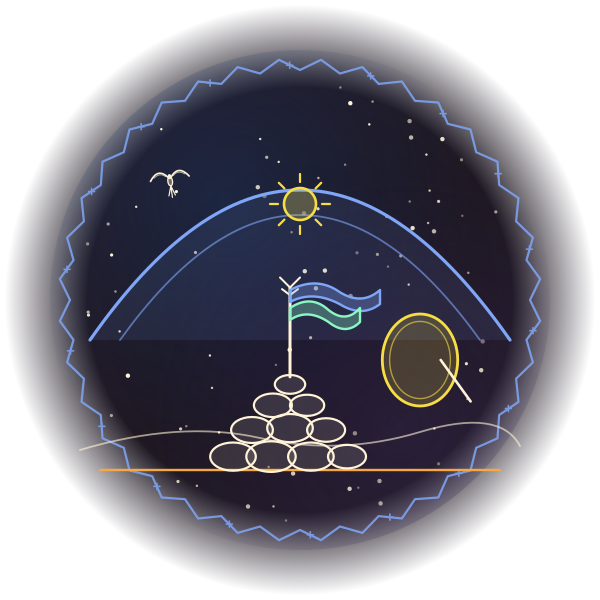
With Tibetan Buddhism, the «Yellow Church», a powerful opponent arrived from the 16th century onward. Shamans were persecuted, their ongod figures burned; Buddhism took over many old customs and gave them new names – so the ovoo festivals, too, came to be led by lamas. In the 20th century communism then suppressed Buddhists and shamans alike.
Since the turning point of 1990, shamans in Mongolia have been experiencing a great revival, especially in Ulaanbaatar. Among the Darkhad in the north, the Buryats at Lake Baikal and in neighbouring Tuva the traditions have held most strongly. Some researchers also note darker sides: competition, business and many new shamans whose training was short.
Khöömii – singing with two voices
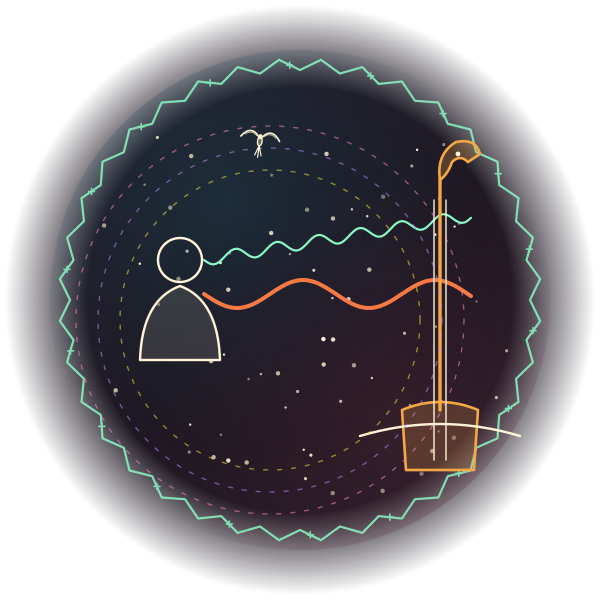
In Mongolia and Tuva people sing two notes at once with one throat: a deep drone and above it a whistling melody of overtones. Throat singing imitates wind, water, horses and mountains. It is not a shaman’s ritual, but it comes from the same world in which sound calls nature and the listener grows still. UNESCO has listed khöömii as Intangible Cultural Heritage of Humanity since 2010.
A path without plants
Unlike in the Amazon or in Mexico, sacred plants play hardly any role in Mongolian shamanism. Juniper is burned to purify, milk and spirits are offered. The door to the other world is opened by the rhythm of the drum, the singing, the darkness of night and the power of the ancestors.
Khöömii – throat singing
This is what khöömii sounds like: two voices rise from a single throat at once – a deep, humming fundamental and above it a bright, whistling overtone, like wind over the steppe or water in a stream. For the herders of Mongolia this song is a way of speaking with nature.
With respect
An ovoo is not a photo opportunity to climb, and a shaman’s ritual is not a show for travellers. Anyone travelling in Mongolia walks around the ovoo clockwise, takes no stones away and asks permission before taking pictures. Genuine böö and udgan work for their community, not for an audience.
Sources
Walther Heissig: Die Religionen der Mongolei, 1970 · Caroline Humphrey (with Urgunge Onon): Shamans and Elders – Experience, Knowledge, and Power among the Daur Mongols, 1996 · Morten Axel Pedersen: Not Quite Shamans – Spirit Worlds and Political Lives in Northern Mongolia, 2011 · Manduhai Buyandelger: Tragic Spirits – Shamanism, Memory, and Gender in Contemporary Mongolia, 2013 · UNESCO: Mongolian traditional art of Khöömei, 2010 · Wikipedia: Tengrism
The content was created with AI.