Maya Traditions
People of maize
The Maya have not vanished. Several million people in Guatemala, Mexico, Belize, Honduras and El Salvador still speak one of the roughly thirty Mayan languages today. Guatemala alone recognises twenty-two of them.
Their ancestors built cities such as Tikal, Palenque and Copán, watched the sky more precisely than the Europeans of their time and wrote in glyphs on stone and bark paper. Much of it was destroyed. What remained lives on in the highlands: in the fires of the ceremonies, in the counting of the days, in the patterns of the weavings and in the maize from which people are made.
This page follows above all the K’iche’ of highland Guatemala, the people of the Popol Wuj.
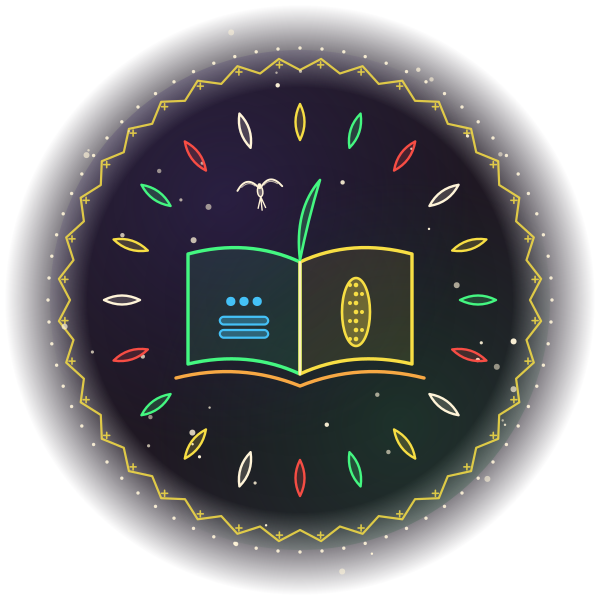
Popol Wuj – the Book of Council
A book that was saved
Around 1550 K’iche’ scholars wrote down the ancient stories of their people in Latin letters so that they would not be lost. Around 1701 the Dominican friar Francisco Ximénez found the manuscript in Chichicastenango, copied it and translated it into Spanish. His copy is now in Chicago. The Popol Wuj is regarded as the most important book of the Maya.
The people of maize
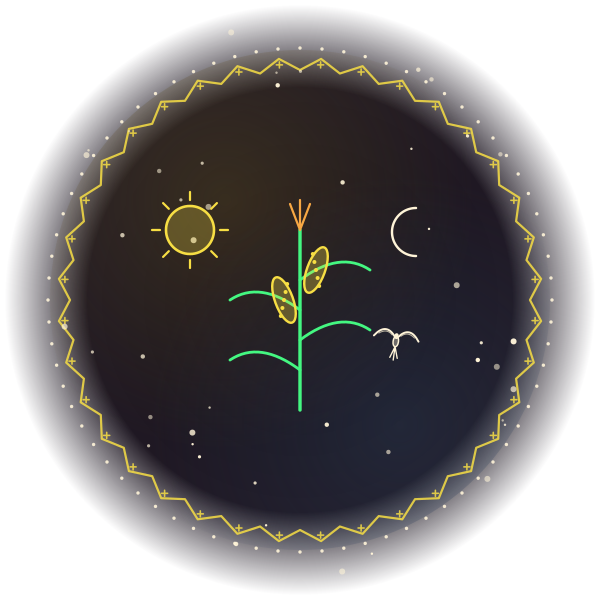
In the beginning there was only the silent sky and the resting sea. Tepew and Q’ukumatz, the Feathered Serpent, and Uk’u’x Kaj, the Heart of Sky, took counsel and let the earth rise. Then they tried to create beings who would honour and remember them. The animals could not speak. The people of mud dissolved. The people of wood had no heart and no memory and perished in a flood. Only when Grandmother Xmukane ground white and yellow maize did the first four men arise from this dough – and after them the women. That is why the Maya still call themselves people of maize.
The Hero Twins
Junajpu and Xb’alanke are the sons of Jun Junajpu, whose head the lords of the underworld Xib’alb’a had hung in a calabash tree, and of Xkik’, the daughter of an underworld lord. With cunning, courage and humour the twins pass all the trials of Xib’alb’a, win the ballgame, defeat the death lords Jun Kame and Wuqub’ Kame and finally rise into the sky as sun and moon. The ballgame, played in the courts of many ancient cities, tells of this struggle between life and death.
The world tree and the four directions
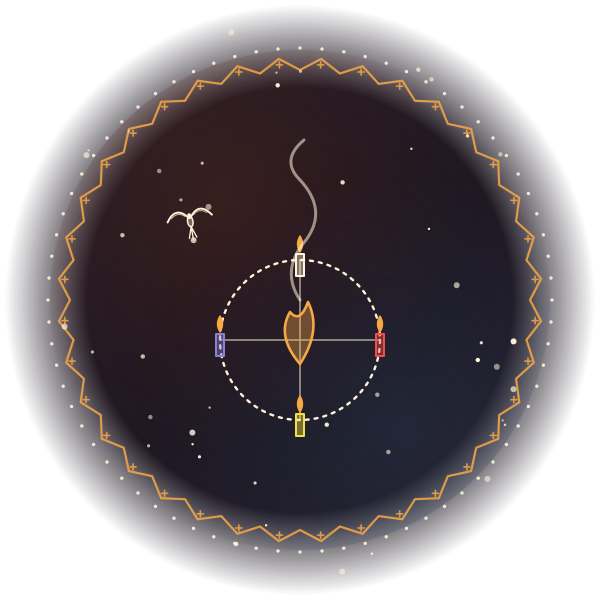
In the centre of the world stands a great tree, often imagined as a ceiba, connecting sky, earth and underworld. Around it the four directions are arranged, each with its colour: the east red like the rising sun, the north white, the west black, the south yellow – and the centre blue-green. Maize comes in the same colours, and in the ceremonies candles burn in these colours.
Sacred time
Cholq’ij – the order of the days
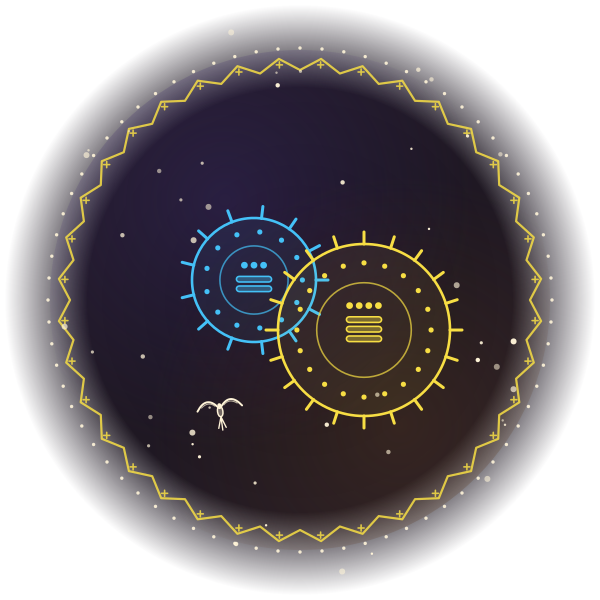
The sacred calendar of the K’iche’ is called Cholq’ij, the order of the days. Twenty named days mesh like two gears with the numbers one to thirteen – making a cycle of 260 days, about the time a child grows in the womb. Every day has its nawal, its power and nature. The day of birth says something about a person’s gifts and tasks. In highland Guatemala this count has been carried on without interruption for more than two thousand years.
The twenty days
- Imox – water, origin, the unconscious
- Iq’ – wind, breath, life
- Aq’ab’al – dawn, new beginning
- K’at – net, what is gathered
- Kan – serpent, life force
- Kame – death, the ancestors
- Kej – deer, the four directions
- Q’anil – seed, ripeness, abundance
- Toj – offering, balance
- Tz’i’ – dog, justice and loyalty
- B’atz’ – thread, monkey, time itself
- E – road, tooth
- Aj – reed, home and family
- I’x – jaguar, the power of the earth
- Tz’ikin – bird, good fortune and vision
- Ajmaq – forgiveness, the departed
- No’j – knowledge, thought
- Tijax – flint, cutting, healing
- Kawoq – storm, community
- Ajpu – sun, the blowgunner
The interpretations are brief and differ from daykeeper to daykeeper. Every day has many sides.
Ab’, the Calendar Round and the Long Count
Alongside the Cholq’ij runs the solar year Ab’: eighteen months of twenty days and five days at the end. Only after 52 years do both calendars meet again in the same way – a great circle, the Calendar Round. The cities of the Classic period also counted the days since a starting point, the Long Count. On 21 December 2012 a cycle of thirteen b’ak’tun came to a close. The Maya never announced the end of the world for it – for them a new cycle simply began.
Ceremony and healing
Ajq’ij – the daykeepers
Ajq’ij literally means: the one who belongs to the sun, to the day. The daykeepers know the calendar, interpret the days, lead ceremonies and give counsel in illness, conflict and important decisions. Often a dream, an illness or their birthday calls them to this task. On a day Wajxaqib’ B’atz’, Eight Thread, new ajq’ij are initiated in Momostenango and other places, and many communities then celebrate the new beginning of the sacred calendar.
The sacred fire
At the heart of many ceremonies is the fire. A circle is drawn on the ground, often with sugar, with a cross inside for the four directions. On it are laid pom, copal resin, candles in the colours of the directions, flowers, herbs, honey, cacao, tobacco. While the fire burns, the ajq’ij counts the days, calls on Ajaw, the Heart of Sky and Earth, and the ancestors, qati’t qamam, our grandmothers and grandfathers. The fire speaks: how it burns, where it leans. Such ceremonies take place in houses, at altars on hills and mountains, at springs and in caves.
Healers, midwives and the sweat bath
Alongside the ajq’ij there are healers, ajkun, bonesetters and iyom, the midwives, who to this day accompany a large share of the children in the countryside into the world. Many houses have a tuj, a small sweat bath of adobe or stone. People cleanse themselves in it, mothers recover after giving birth, the sick sweat the cold out of the body. Healing always also means balance with people, the ancestors and the earth.
Life today
Maize, milpa and cacao
Ixim, maize, is more than food: it is sacred, and no kernel is left lying carelessly. In the milpa, maize, beans and squash grow together and support one another. Cacao, kakaw, was a drink of feasts and gods among the ancient Maya – and its beans served as money.
Woven stories
Many Maya women wear the po’t, the huipil, woven on the backstrap loom. Every village has its colours and patterns: diamonds for the world and its four corners, zigzags for serpent and mountains, birds, maize plants, stars. Weaving a huipil takes weeks or months, and whoever wears it tells where she comes from.
Wounds and resistance
After the Spanish conquest books were burned and ceremonies forbidden – many lived on in hiding. In the civil war in Guatemala (1960–1996) more than 200,000 people were killed or disappeared, most of them Maya. In 1999 the truth commission spoke of genocide. The K’iche’ woman Rigoberta Menchú received the Nobel Peace Prize in 1992 for her work for the rights of indigenous peoples. Since the peace accords, Maya spirituality and the Mayan languages have again been lived and taught more openly.
With respect
Maya spirituality is a living religion with its own teachers. Around the year 2012 and through tourism, many images have arisen that have little to do with the Maya themselves. Whoever wishes to attend a ceremony turns to ajq’ij from the communities, brings an offering and asks before taking photographs. And whoever buys weavings does best to buy directly from the weavers or their cooperatives.
Sources
Allen J. Christenson: Popol Vuh – The Sacred Book of the Maya, 2003/2007 · Dennis Tedlock: Popol Vuh – The Mayan Book of the Dawn of Life, 1985/1996 · Barbara Tedlock: Time and the Highland Maya, 1982/1992 · Michael D. Coe: Breaking the Maya Code, 1992 · Comisión para el Esclarecimiento Histórico: Guatemala – Memory of Silence, 1999 · Wikipedia: Maya peoples, Popol Vuh, Maya calendar
The images were created with AI.