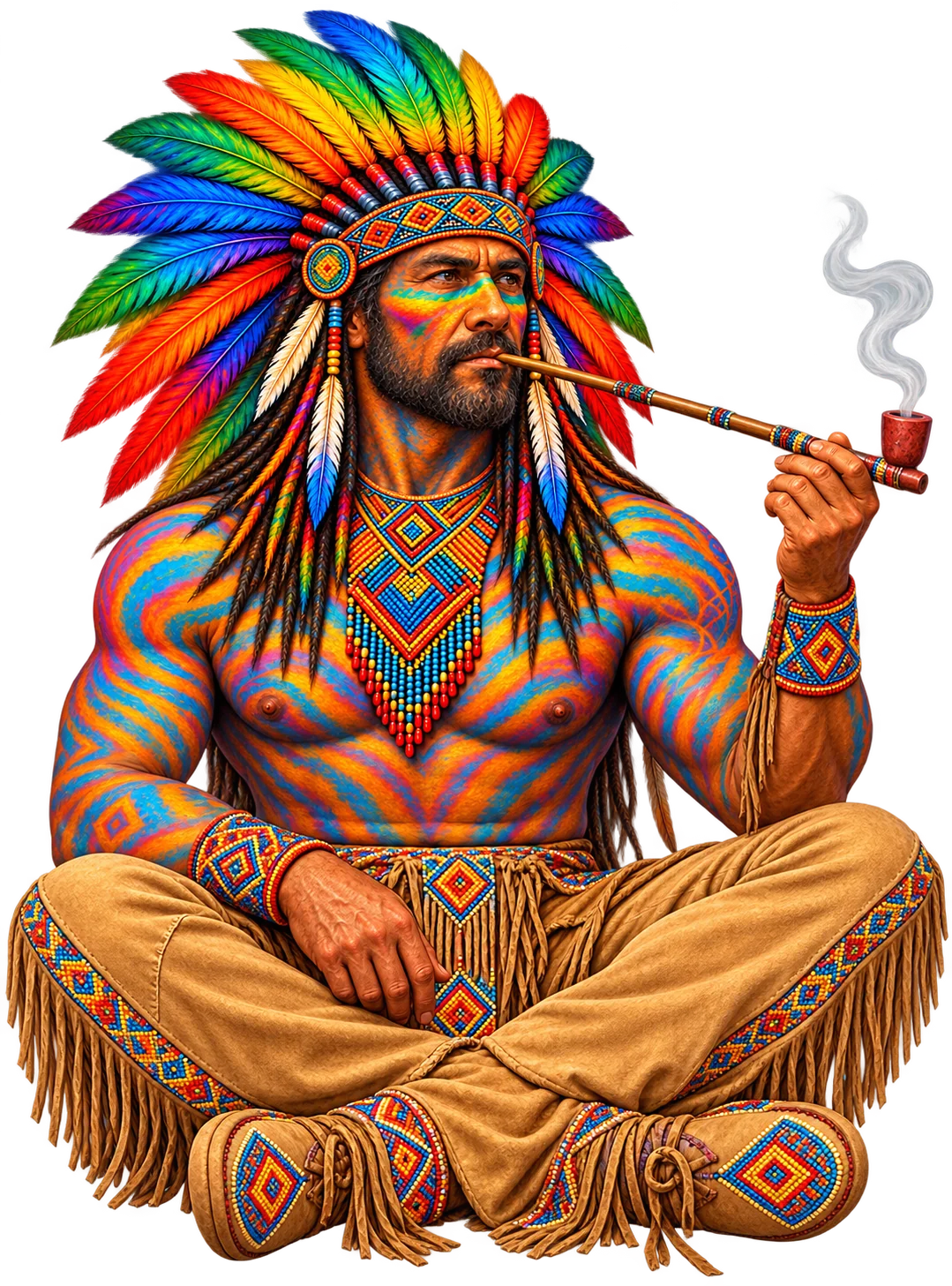
Warriors of the Rainbow
A legend and its journey around the world
When the earth is sick and the animals disappear, so a legend tells, people from all nations and of all colours will come together. They carry the knowledge of the elders within them and heal what has been wounded.
They are called the Warriors of the Rainbow. Their strength is not the sword but the heart. They do not fight against anyone – they stand up for life.
The warrior on my site wears these colours. Here I tell where the legend comes from – and why it still resonates in me.
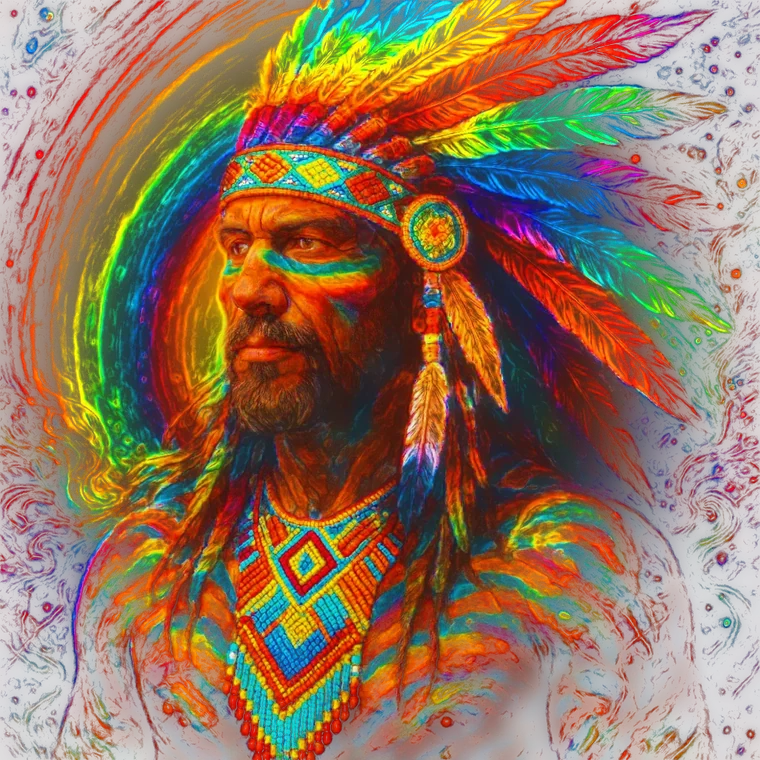
The legend
The best known version is the story of “Eyes of Fire”, an old grandmother. She tells her grandson that a time will come when human greed wounds the earth: the fish die in the rivers, the birds fall from the sky, the water turns black and the trees grow fewer.
Then, she says, the keepers of the old stories, songs and rituals will be needed. People of all colours will rediscover them and learn from them. A rainbow will announce them. They will make the earth green again, the rivers clean and the forests alive – not with violence, but with love and community.
Where it comes from
The legend is often attributed to the Hopi or the Cree. But its trail leads to a book: “Warriors of the Rainbow” by William Willoya and Vinson Brown, published in California in 1962. Willoya came from Alaska, Brown was a naturalist and publisher.
The book collects dreams and stories from various peoples – and interprets them as signs of the Second Coming of Christ. It is more a Christian devotional tract than a handed-down prophecy. No such tradition is known among the Hopi or the Cree themselves. The researcher Michael Niman therefore calls the story “fakelore”: newly invented and passed off as ancient knowledge.
How it travelled the world
In 1971 the journalist Bob Hunter took the book along on the first voyage of the young Greenpeace against the nuclear tests at Amchitka in Alaska and passed it around on board. From then on, many on board saw themselves as the “first tribe of Rainbow Warriors”.
On 2 May 1978 Greenpeace named a converted fishing vessel “Rainbow Warrior”. On 10 July 1985 the French secret service sank it in Auckland harbour with two explosive devices. The photographer Fernando Pereira was killed. “You can’t sink a rainbow” became the motto. Today the third Rainbow Warrior is already sailing the seas.
The Rainbow Family, which has held large outdoor gatherings since 1972, also passes the legend on.
What the peoples themselves say
Many Indigenous people view the legend critically. It is passed off as their prophecy – and sometimes taken as permission to imitate their ceremonies. In 2015, Lakota and other Indigenous voices publicly spoke out against groups who invoked the “rainbow prophecy” and held their own “Indian” rituals in the Black Hills, the sacred Ȟe Sápa.
Their request is simple: listen to the living peoples instead of borrowing their story. The Hopi have their own traditions, kept by their elders. Whoever wants to be a rainbow warrior needs no borrowed feather – but respect.
Genuine voices of connection
Still, the longing behind the legend is old – and it has genuine voices. In their prayers the Lakota say Mitákuye Oyás’iŋ: all my relatives. This means all people, the animals, the plants, the stones, the whole of creation.
And the Lakota healer Heȟáka Sápa, Black Elk, told of a vision: he saw the sacred hoop of his people as one of many hoops that together form one great circle – and in its centre a flowering tree sheltering all the children of one mother and one father.
Good to know
The Warriors of the Rainbow are not an ancient prophecy but a legend from 1962. What it says can still come true: that people of every origin stand up for the earth together.
The most honest way to carry it is as an invitation – not as a borrowed heritage.
What the rainbow tells me
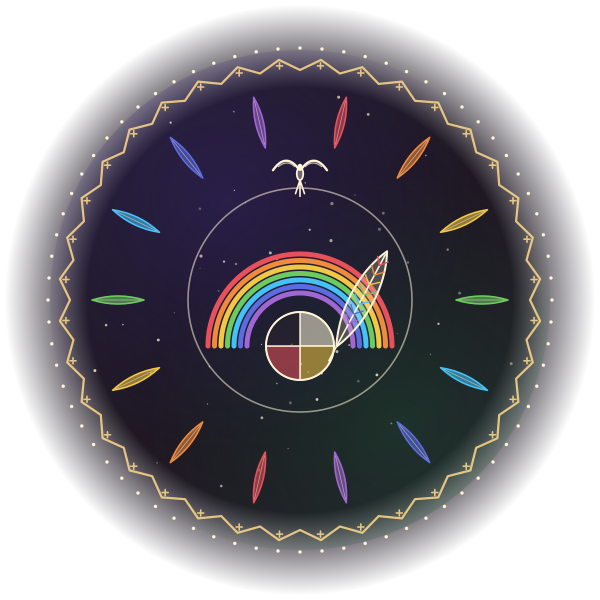
A rainbow appears when light passes through water. It belongs to no one and shows itself to everyone who looks at the right moment. That is why I love this image.
For me, a rainbow warrior is not a title you give yourself. It is an attitude: listening before speaking. Learning without taking. Giving thanks where you receive. And contributing to the healing of the earth with what you have – a song, a craft, an open heart.
To the Lakota traditions To the Shipibo traditions To the wheel of the year and the moon
Sources
William Willoya, Vinson Brown: Warriors of the Rainbow, Naturegraph, Healdsburg 1962 · Michael I. Niman: People of the Rainbow. A Nomadic Utopia, University of Tennessee Press 1997 · Frank Zelko: Warriors of the Rainbow: The Birth of an Environmental Mythology, Arcadia, Environment & Society Portal · Legend of the Rainbow Warriors and Rainbow Warrior (1955), Wikipedia · John G. Neihardt: Black Elk Speaks, 1932