Ways of the Inca
Children of the sun
Around 1400 Cusco was a small town in a high valley of the Andes. A hundred years later the Inca ruled from here over an empire stretching four thousand kilometres from Ecuador to Chile, with perhaps ten million people and dozens of peoples and languages.
Their ruler was regarded as the son of the sun. Their year followed the course of the sun, moon and stars, their ancestors lived among them as mummies, and they fitted their stones so precisely that to this day no knife blade fits into the joints.
This page tells of the beliefs, the festivals and the everyday life of the Inca. Their empire, their roads, the knotted cords and the Andean cross are on the page Ways of the Andean peoples.
Sun and ruler
For the Inca, heaven and rule belonged together. Whoever ruled did so in the name of the sun and the ancestors.
Sapa Inca – the son of the sun
Sapa Inca means “the only Inca”. He was regarded as the son of Inti, the sun, and stood between heaven and earth. At his side ruled the Coya, the queen, often his sister, daughter of the moon. The ruler wore the maskapaycha, a headband with a red fringe, and seldom spoke to the people himself. Cusco too was divided in two: Hanan Cusco, the upper, and Urin Cusco, the lower, each with its own families and duties.
Qurikancha – the golden enclosure
In the middle of Cusco stood the Qurikancha, the most important temple of the empire. Its walls were covered with plates of gold, and in its garden stood maize plants, llamas and herders of gold and silver. Here the sun, moon, thunder and stars were worshipped. The Spaniards melted down the gold and built the monastery of Santo Domingo on the walls. In the earthquakes of 1650 and 1950 the church collapsed, while the Inca walls beneath it remained standing.
Mallki – the ancestors who remain
A deceased Inca ruler was not gone. His body was preserved, wrapped in fine cloth, and lived on as a mallki in his palace. His family, the panaqa, provided him with food and chicha, asked him for advice and carried him to the square for the great festivals. In the villages, too, people honoured the mummies of the ancestors. In 1559 the Spanish official Polo de Ondegardo tracked down several rulers’ mummies that had been hidden. No one knows where they are today.
Yanantin – the pair that completes itself
In Inca thought the world consists of pairs: sun and moon, man and woman, upper and lower, right and left. Yanantin means “united in helping one another”. Neither side is whole without the other. Where the two meet, tinkuy arises, the encounter, sometimes as a festival, sometimes as a ritual fight between two halves of a village. Balance grows out of the tension of opposites.
The Inca year
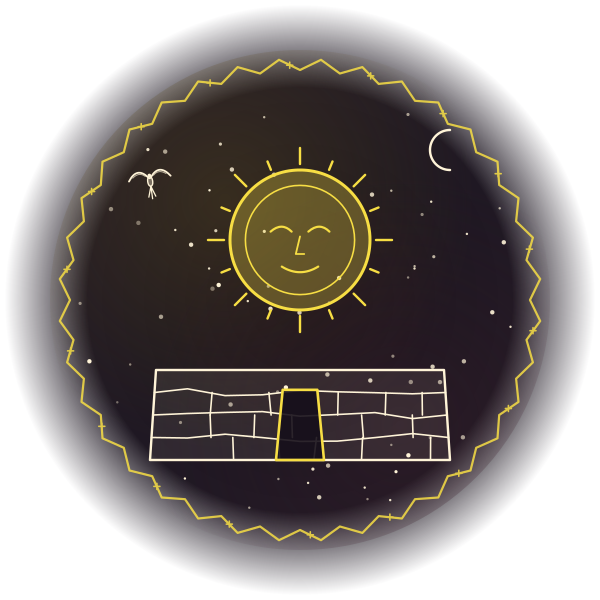
The Inca year had twelve moons, and each had its festival. The two solstices were its pillars: Inti Raymi in June, when the sun stands lowest, and Qhapaq Raymi in December, when it stands highest. The festival of the sun in June is described on the page Ways of the Andean peoples.
Qhapaq Raymi – the great festival
At the solstice in December, in the Andean summer, the Inca celebrated Qhapaq Raymi, the “splendid festival”. At this time the young men of the Inca families were received into the world of adults. During this warachikuy they fasted, raced up the sacred mountain Wanakawri and received their first breechcloths and weapons. Their earlobes were pierced and later adorned with large golden discs. The Spaniards therefore called them “orejones”, the big ears.
Situwa – the city is cleansed
In September, when the rainy season began and often brought illness with it, Cusco celebrated the Situwa. In the great square everyone cried: “Illnesses, misfortune, go away!” Four groups of warriors ran out with torches and spears towards the four parts of the empire and passed the evil on from runner to runner, until far away it was washed off in a river. Afterwards people bathed, ate together and began the new year cleansed.
Aymuray – the harvest festival
In May, when the maize was ripe, people brought in the harvest while singing. The ruler himself brought in the first maize from a sacred field. The finest cobs were wrapped in cloth and honoured as Mama Sara, mother of maize, so that she would protect the harvest in the storehouse. To this day farmers in the Andes sing aymuray songs at harvest time.
Qullqa – the Pleiades foretell the rain
The Pleiades, the Seven Sisters, were called qullqa, the storehouse, by the Inca. In June, when after a time of invisibility they rise again at dawn, farmers to this day climb a hill and look up. If the stars shine large and clear, the rains will come early and plentifully, and the potatoes are planted at the usual time. If they are small and pale, people plant later. In 2000 researchers showed that the haze in front of the stars is linked to high clouds in El Niño years. So the farmers really do read the coming rain in the sky.
Sky and stone
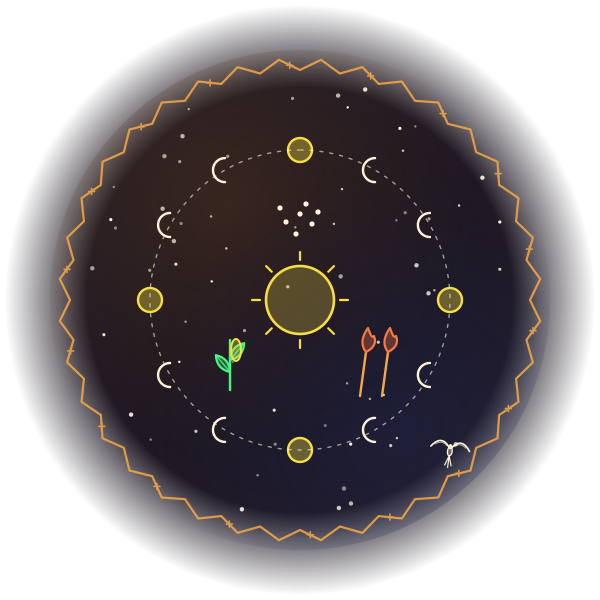
The Inca read the sky and recreated it in stone. Their temples, windows and fountains are often aligned with the sun and stars, and on the highest peaks they made their most precious offerings.
Mayu – the river in the sky and its animals
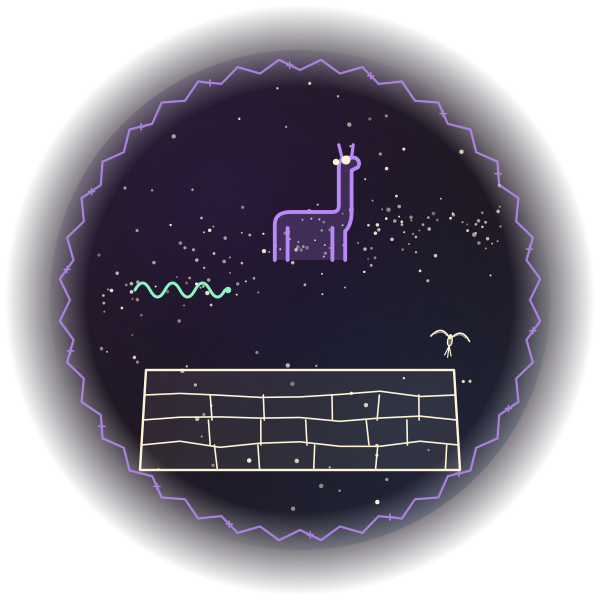
For the Inca the Milky Way was Mayu, a river that carries water through the sky. Unlike us, they saw constellations not only in the points of light but also in the dark clouds between them: a serpent, a toad, a partridge, a fox and the great llama Yakana with two shining eyes, the brightest stars of Centaurus. At midnight, it is said, Yakana bends down and drinks water from the sea, so that the earth is not flooded and the springs keep flowing.
Intiwatana – where the sun is tied
At the highest point of Machu Picchu stands a stone carved out of the rock with an angular pillar. It is called Intiwatana, the place where the sun is tied. The name probably dates only from later times, but such stones served the Inca as markers in the course of the year: their shadow indicated the solstices and equinoxes. Machu Picchu was probably built around 1450 for the ruler Pachakuti and has been a UNESCO World Heritage Site since 1983.
Stones without joints
The Inca built without mortar. They ground blocks of andesite and limestone together so precisely that they seem to have grown that way. In Cusco a stone in the Hatun Rumiyuq lane has twelve corners and fits its neighbours exactly on every side. Doors and windows are trapezoidal, and the walls lean slightly inwards. In this way they survived the earthquakes that destroyed many later buildings. For the Inca some stones were alive, beings with a power of their own.
Qhapaq hucha – offerings on the highest peaks
In special times, at the death of a ruler, in drought or earthquake, the Inca brought the apus their most precious offerings: small figures of people and llamas made of gold, silver and shell, fine cloth and feathers. In the qhapaq hucha, children from all parts of the empire were also led to Cusco and from there to high peaks and sacrificed. They were regarded as messengers to the gods and were afterwards venerated themselves. In the 1990s researchers found such graves on Ampato and Llullaillaco, at more than six thousand metres. Today this is a part of history remembered with gravity.
Life in the empire
The Inca empire knew no money and no markets as we know them. It lived on work done in turns, on full storehouses and on cloth that was worth more than gold.
Mit’a and qullqa – work and stores
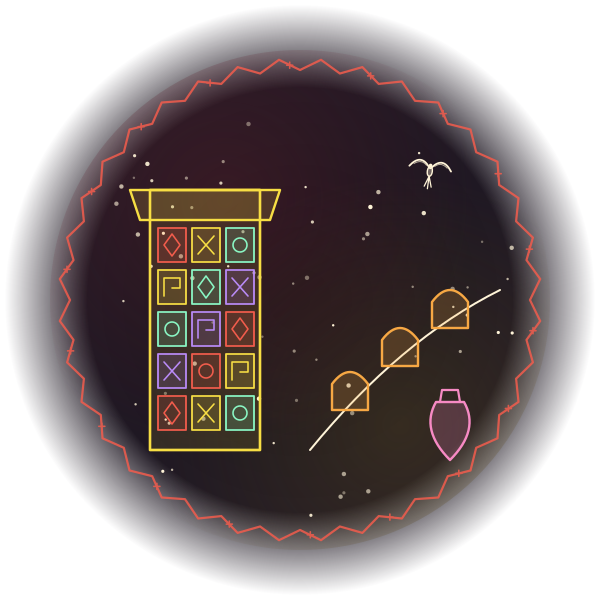
Instead of taxes in money, families performed work in turns, the mit’a: in the fields of the sun and the ruler, building roads, bridges and terraces, in the workshops or in the army. In return the state provided food, chicha and festivals. The harvests went into thousands of storehouses, the qullqa, which stood on airy slopes so that maize, chuño and cloth stayed dry. In bad years they were opened.
Aqllakuna – the chosen women
In every province girls were chosen and taught in the aqllawasi, the house of the chosen women. These aqllakuna wove the finest cloth of the empire and brewed the chicha for the ceremonies. Some served the sun all their lives; others the ruler gave as wives to deserving men. The Spaniards compared them with nuns, but their role was more varied: with their work they kept the giving and receiving of the empire going.
Qumpi and tokapu – cloth more precious than gold
The finest Inca cloth was called qumpi, woven from vicuña and alpaca wool, with more than a hundred threads per centimetre. The rulers’ tunics were adorned with tokapu, small squares with geometric signs that may have stood for peoples, places or offices. Cloth was the most precious gift: with a garment the ruler bound lords to himself, and at the great ceremonies the finest cloths were given to the gods in the fire.
Rutuchikuy – the first haircut
When a child was about two years old, it was received into the family. At the rutuchikuy the eldest relative cut the first lock, then all the others did so in turn, and each placed a gift. Only now did the child receive its name. The custom lives on in many Andean villages to this day, and the godparent of the first haircut remains bound to the child for life.
Ama suwa, ama llulla, ama qhilla
“Do not steal, do not lie, do not be lazy.” These three sayings are regarded as the basic law of the Inca, and people in the Andes still greet each other with them today. They were written down only in colonial times, and how the Inca themselves used them is not known exactly. But they live on: in 2009 Bolivia wrote them into its constitution as principles, together with suma qamaña, the good life.
With respect
Much of what we know about the Inca was written down by Spanish chroniclers, often through the eyes of conquerors. Then there are the works of descendants such as Inca Garcilaso de la Vega and Felipe Guaman Poma de Ayala, and the work of archaeology. The image of a golden, perfect empire is just as one-sided as that of a cruel one. The heirs of the Inca are today’s Quechua communities. Those who visit Cusco or Machu Picchu respect the rules of the places, buy from local people and ask before taking photos.
Sources
Inca Garcilaso de la Vega: Comentarios reales de los Incas, 1609 · Felipe Guaman Poma de Ayala: Nueva corónica y buen gobierno, c. 1615 · Bernabé Cobo: Historia del Nuevo Mundo, 1653 · Terence N. D’Altroy: The Incas, 2002/2014 · Brian S. Bauer: The Sacred Landscape of the Inca, 1998 · Gary Urton: At the Crossroads of the Earth and the Sky – An Andean Cosmology, 1981 · B. S. Orlove, J. C. H. Chiang, M. A. Cane: Forecasting Andean rainfall and crop yield from the influence of El Niño on Pleiades visibility, Nature 403, 2000 · Johan Reinhard: The Ice Maiden, 2005 · Wikipedia: Inca Empire
The content and images were created with AI.