Ways of the Wixárika
The blue deer
In the Sierra Madre Occidental, in the mountains and deep canyons of western Mexico, live the Wixárika. In Europe they are mostly known as the Huichol. Some fifty thousand people speak their language, above all in Jalisco and Nayarit, but also in Durango and Zacatecas.
The Spaniards reached their mountains only late, and much of the old world has remained alive here: the fires at which people sing all night long, the pilgrimages to the sacred places, the colourful yarn paintings and beadwork in which the visions live on. And the blue deer who shows people the way.
The story of the blue deer
In the beginning the world was dark and cold. The ancestors, the first beings, rose from the sea in the west. They were freezing, sick and hungry, and no one knew how life could succeed.
So they gathered around Tatewari, Grandfather Fire, the first mara’akame, the first one who sings. He said: “We must go east, to Wirikuta, to where the light lives.” And they set out on the long road across the mountains, through the canyons, into the desert.
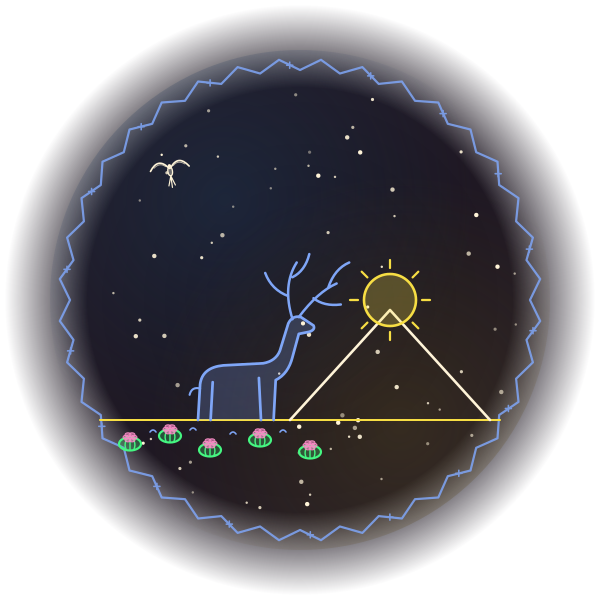
On the way a deer appeared to them, blue like the sky before dawn. It was Kauyumari, their elder brother. He ran ahead of them and showed them the way. Wherever he stepped, the hikuri, the sacred cactus, grew from his tracks, and whoever ate of it could see what the eyes alone cannot see.
When they reached the sacred mountain in Wirikuta, the deer lifted the sun into the sky with his antlers. For the first time the world became bright and warm. Ever since, the Wixárika walk this road of the ancestors every year to renew the world.
This, or something like it, is how the mara’akate tell it. Every community, every singer tells the story a little differently, and in the singing it grows further every night.
The world of the Wixárika
For the Wixárika the landscape is a temple. Springs, caves, rocks and mountains are the places where the ancestors once worked, and they live there to this day.
The five sacred places
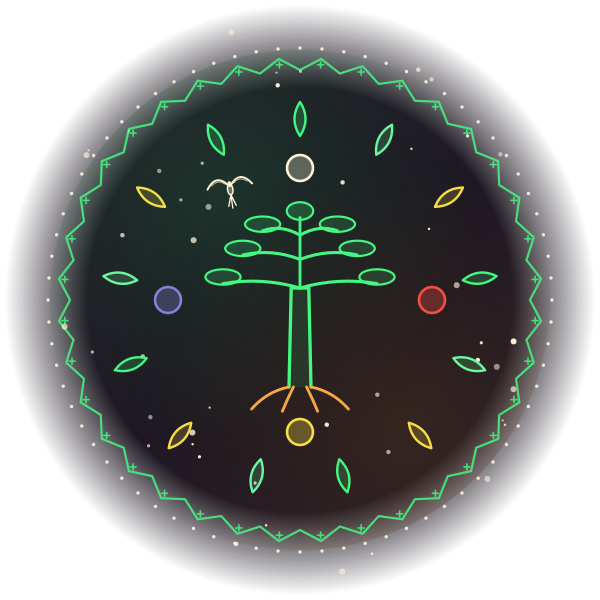
The world of the Wixárika has four directions and a centre, and each has its sacred place. In the west lies Haramara, the sea near San Blas, where the ancestors rose from the water. In the south Xapawiyemeta, an island in Lake Chapala. In the north Hauxa Manaka, the Cerro Gordo in Durango. In the east Wirikuta, the desert near Real de Catorce, where the sun was born. And at the centre Teekata, the home of Grandfather Fire. Together they form a diamond cross over the land. In 2023 Mexico recognised these places as sacred by decree.
Tatewari – Grandfather Fire
Tatewari is the eldest of the ancestors, the first mara’akame, the wise one who led the others on the first pilgrimage. He is present in every fire. During ceremonies he burns all night; people feed him with wood, speak to him, and he carries the prayers onwards. Beside him stand Tayau, Father Sun, Takutsi Nakawe, the grandmother of growth, and the mothers of rain and maize.
Watakame and the great flood
Once Takutsi Nakawe warned the farmer Watakame of a great flood. She had him build a box from the wood of a fig tree and sent him on the journey with a black dog, fire and seeds. For five years the box drifted on the water until it came to rest on a mountain. There at night the dog shed her skin and became a woman. Watakame burned the skin, and from the two of them people are descended. The place where the canoe came to rest is Hauxa Manaka in the north.
Maize, deer and hikuri
In Wixárika thought three sacred beings belong inseparably together: maize, which nourishes the body, the deer, who is brother and guide, and hikuri, the sacred cactus, which opens the eyes to the other world. The deer turns into hikuri, and the blood of the deer makes the maize grow. This is why pilgrimage, hunt and sowing belong to a single circle of the year.

The journey to Wirikuta
Every year in the dry season groups of pilgrims retrace the road of the ancestors, some five hundred kilometres from the mountains to the desert of San Luis Potosí. Since 2025 the “Ruta Wixárika”, the web of these roads and their sacred places, has been a UNESCO World Heritage Site.
The pilgrimage of the ancestors
The pilgrims are called jicareros, after the gourds they carry for the ancestors. On the road they themselves become ancestors: they bear their names, fast, sleep little and abstain from salt and sexuality. Before setting out, each of them names their own failings at the fire; a knot is tied in a cord for each, and the cord is burned. Those going for the first time are blindfolded at the threshold of Wirikuta. There people speak an inverted language: the old is called new, night is called day.
The hunt for the deer
In Wirikuta the hunt begins. The mara’akame looks for the tracks of the deer, and where he finds them, the first hikuri grows. It is “shot”: arrows are laid in the four directions around it, people pray, ask forgiveness and carefully lift it from the earth. Then everyone gathers hikuri for their communities, and the pilgrims paint their faces with the bright yellow powder of the uxa root. With the hikuri they return home, where it is shared in the festivals of the year.
Wirikuta is defended
Wirikuta is threatened today. Around 2010 large parts of the desert were granted to mining companies that wanted to dig there for silver. The Wixárika responded with marches, concerts and lawsuits, under the call “Wirikuta no se vende, se ama y se defiende” – Wirikuta is not for sale, it is loved and defended. Hikuri itself is also becoming scarce, because outsiders gather and sell it. It grows very slowly and is under special protection in Mexico. The decree of 2023 and World Heritage status in 2025 are important victories, but protection remains a task.
Festivals and mara’akate
The Wixárika year follows the change of dry season and rainy season. The festivals call the rain, bless the maize and introduce the children to the world of the ancestors. They are celebrated in the kalihuey, the round temples of the communities, and at the small ancestor houses of the families.
Mara’akame – the one who sings
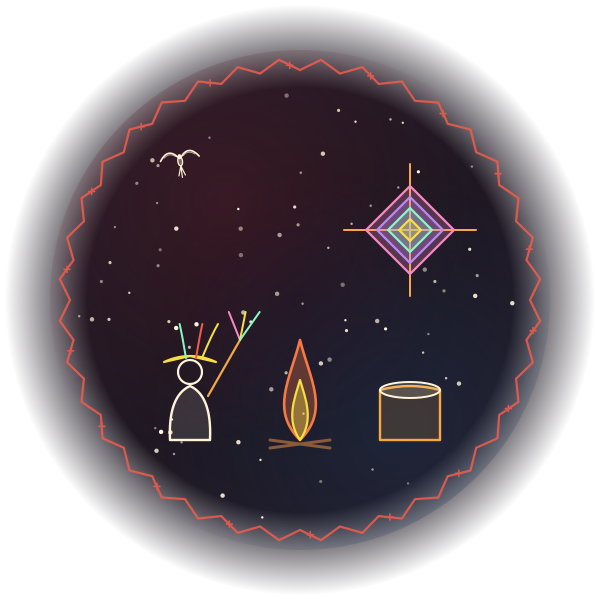
The mara’akame, often also a woman, is singer, healer and keeper of knowledge. At the festivals he sits by the fire all night and sings the stories of the ancestors, sometimes for many hours without a break. Kauyumari, the blue deer, whispers the words into his ear. In his hand he holds the muwieri, a wand with feathers, with which he blesses and heals. One becomes a mara’akame through many years of learning, fasting and pilgrimage, usually five journeys to Wirikuta and more.
Tatei Neixa – the festival of the drum
In autumn, when the first squashes and young maize are ripe, families celebrate Tatei Neixa. The small children sit around the mara’akame with rattles in their hands. To the beat of the drum he sings them on a journey: as birds they fly with him over the mountains to Wirikuta, learning the way and the sacred places long before they walk it themselves. Then the first fruits are blessed and may be eaten.
Hikuri Neixa – the dance that calls the rain
When the pilgrims have returned from Wirikuta and the dry season is coming to an end, the community celebrates Hikuri Neixa. For days and nights everyone dances in circles around the fire, stamping their feet on the earth and singing to call the clouds. The jicareros lay down their role as ancestors and become ordinary people again. Then the sowing begins, and with the rain life returns to the mountains.
Tsikɨri – the God’s eye
The tsikɨri, in Spanish “ojo de Dios”, consists of two crossed sticks around which coloured wool is wound into a diamond-shaped eye. When a child is born, the father winds the first eye. Each year another is added until the child is five years old. In this way the eye watches over its first, most vulnerable years, and its four points face the four directions of the world.
Art that prays
The colourful art of the Wixárika is world-famous. But for them a picture is not only beautiful: it is an offering to the ancestors, a prayer and a memory of what has been seen in visions.
Nierika – the gateway to the other world
Nierika means “the ability to see”, and it is also a round object, a mirror or a disc through which the ancestors look. From this came the famous yarn paintings: beeswax is spread on a board, and coloured woollen threads are pressed into it thread by thread, often in spirals around a centre. Artists such as José Benítez Sánchez (1938–2009) told entire creation stories in them. Many paintings show a round opening in the middle, the gateway through which one looks into the world of the ancestors.
Pictures made of beads
With tiny glass beads set one by one into beeswax, the Wixárika decorate gourd bowls, masks and animal figures: deer, jaguars, snakes, eagles. The bowls are called xukuri and were originally offering vessels: prayers, maize and gifts are placed in them and taken to the sacred places. So the patterns of deer, hikuri flowers and maize plants are not mere decoration but requests for rain, health and a good life.
Embroidered prayers
The clothing of the Wixárika tells stories too. Women embroider shirts, capes and bags with deer, hikuri flowers, maize plants, scorpions and the two-headed eagle that watches over the world. Whoever wears their finest clothes at a festival wears the stories of the ancestors on their body. The garments of the mara’akate and the pilgrims are especially richly embroidered, and the men’s feathered hats show how often they have already been to Wirikuta.

With respect
For the Wixárika, hikuri is a sacred being, a brother, not a drug for travellers. Peyote tourism in Wirikuta harms the desert, the plants and the pilgrims who want to pray there. Those who wish to be close to Wixárika culture buy yarn paintings, beadwork and embroidery directly from the artists or their cooperatives, support the protection of Wirikuta and enter their ceremonies only when invited.
Sources
Carl Lumholtz: Unknown Mexico, 1902 · Robert M. Zingg: The Huichols – Primitive Artists, 1938 · Barbara G. Myerhoff: Peyote Hunt – The Sacred Journey of the Huichol Indians, 1974 · Johannes Neurath: Las fiestas de la Casa Grande, 2002 · Arturo Gutiérrez del Ángel: La peregrinación a Wirikuta, 2002 · Juan Negrín: Wixárika Research Center (wixarika.org) · INPI: Relatos de los wixaritari, 2023 · UNESCO: Ruta Wixárika por los Sitios Sagrados a Wirikuta, 2025 · Wikipedia: Huichol people
The content and images were created with AI.